
Kia EV2: Child Restraint System (CRS) / Securing a Child Restraint System with a lap/shoulder belt
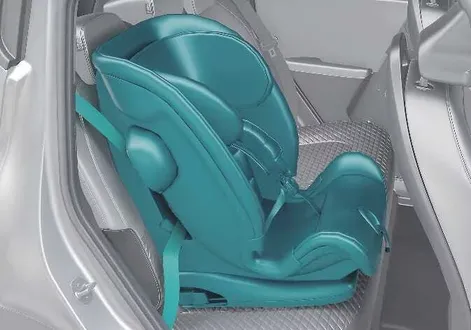
When not using the ISOFIX system, all Child Restraint Systems must be properly secured to a rear seat of your Kia EV2 using the lap portion of a lap/shoulder belt.
|
To successfully install a Child Restraint System on the rear seats of your Kia EV2, carefully execute the following systematic steps:
-
Place the Child Restraint System firmly on a designated rear seat and route the vehicle lap/shoulder belt around or directly through the Child Restraint System, strictly following the specific installation guidelines provided by the Child Restraint System manufacturer.
Make sure that the seat belt webbing remains completely flat and is never twisted at any point.
-
Fasten the lap/shoulder belt metal latch securely into the seat buckle, listening closely for the distinct, audible "click" sound that confirms proper engagement. Position the release button carefully so that it remains easily accessible at all times in case of an emergency evacuation.
-
Remove as much excess slack from the belt system as possible by firmly pushing down on the base of the Child Restraint System while simultaneously feeding the excess shoulder belt webbing back into the emergency locking retractor.
-
Thoroughly push and pull on the Child Restraint System from multiple angles to confirm that the seat belt is holding it rigidly and firmly in place against the vehicle seat.
If the manufacturer of your Child Restraint System recommends utilizing an ISOFIX top tether strap in combination with the standard lap/shoulder belt, please refer to the dedicated section covering the securing of a child seat with the “ISOFIX top tether anchorage” system later in this chapter.
To remove the Child Restraint System from your Kia EV2, simply press the red release button on the buckle, carefully pull the lap/shoulder belt out from the routing paths of the Child Restraint System, and allow the vehicle seat belt mechanism to retract fully.
 Installing a Child Restraint System (CRS)
WARNING
Before installing your Child Restraint System inside your Kia EV2, always:
Read, understand, and carefully follow the precise instructions provided by the manufacturer of the Child Restraint System...
 ISOFIX low anchorage and ISOFIX top tether anchorage (ISOFIX anchorage system) for children
The integrated ISOFIX system holds a Child Restraint System securely in place during everyday driving and unexpected collision scenarios. This advanced system is specifically engineered to make the installation of a Child Restraint System much easier while minimizing the probability of improper installation...
Other information:
Kia EV2 (QV1, 2026-2026) Owner's Manual: Kia AddGear
Kia AddGear is an innovative modular platform that allows users to attach desired lifestyle accessories securely at preferred locations throughout the Kia EV2. WARNING Please install Kia AddGear accessories strictly according to the instructions provided on the official Kia Shop (https://shop...
Kia EV2 (QV1, 2026-2026) Owner's Manual: Wipers and washers
The wipers and washers remove foreign substances from the windscreen and rear window to help maintain visibility. Figure 1. Type A Figure 2...
Categories
- Manuals Home
- 4th Generation Silverado Owners Manual
- 4th Generation Silverado Service Manual
- Folding Mirrors
- Electric Parking Brake
- Instrument Panel Fuse Block (Right)
- New on site
- Most important about car
Vehicle Alarm System
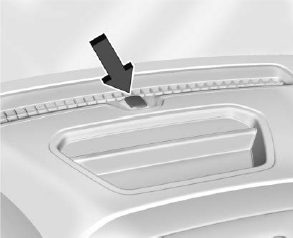
The indicator light, on the instrument panel near the windshield, indicates the status of the system.
