
Kia EV2: Tyres and wheels / Tyre rotation
To promote even tread wear distribution and maximize the lifespan of your tyres, it is strongly recommended to perform a tyre rotation every 10,000 km (6,500 miles) or sooner if irregular wear patterns begin to emerge on your Kia EV2.
During the rotation procedure, technicians should also verify that the wheels maintain correct balance.
While rotating the tyres, perform a thorough inspection for uneven wear characteristics, cuts, cracks, or embedded debris. Abnormal wear is frequently caused by incorrect inflation pressures, misaligned wheels, unbalanced assemblies, aggressive braking habits, or sharp cornering maneuvers. Look closely for structural bumps, blisters, or bulges along the tread blocks or sidewall surfaces; if any such defect is found, the tyre must be replaced immediately. Furthermore, replace any tyre where internal reinforcing fabrics or steel cords become visible through worn rubber. After completing the tyre rotation process, ensure that both front and rear tyre pressures are readjusted to exact factory specifications and verify that all wheel lug nuts are torqued securely to the proper specification of 11–13 kgf·m (79–94 lb-ft).
Refer to the detailed sections covering Tyres and wheels for additional specifications.
Always inspect the disc brake pads for remaining friction material thickness whenever you rotate the tyres on your Kia EV2.
|
|
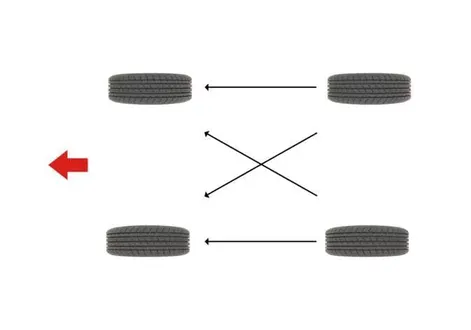
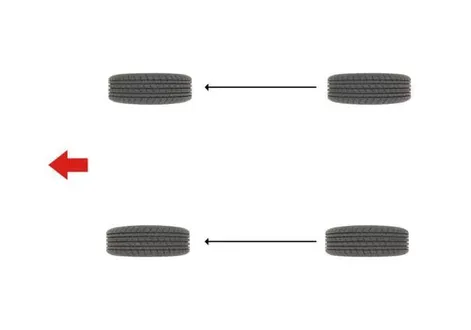
When servicing radial tyres equipped with an asymmetric tread pattern, rotate them strictly from front to rear on the same side of the vehicle rather than crossing them from right to left.
Mixing tyres note
Never mix bias ply and radial ply tyre constructions on your vehicle under any circumstances, as doing so can severely compromise handling stability and vehicle safety.
 Wheel alignment and tyre balance
The wheels and chassis geometry on your Kia EV2 were meticulously aligned and balanced at the factory during production to guarantee the longest possible tyre life and superior driving dynamics...
 Tyre traction
Operating your Kia EV2 on excessively worn tyres, improperly inflated pressures, or slick, contaminated road surfaces significantly reduces available grip and braking traction...
Other information:
Chevrolet Silverado 2019-2026 Owners Manual: Towing Equipment
Hitches Conventional Hitch A conventional hitch is bolted to the frame or cross member of the tow vehicle, and is generally rated Class 2, 3, or 4. Gooseneck Hitch A gooseneck hitch is designed to be coupled to a special hitch leveraging a hitch ball, and is mounted over the rear axle in the truck bed...
Chevrolet Silverado 2019-2026 Owners Manual: Safety Locks
The rear door safety locks prevent passengers from opening the rear doors from inside the vehicle. The safety lock is on the inside edge of the rear doors. To use the safety lock: Move the lever down to the lock position. Close the door. Do the same for the other rear door...
Categories
- Manuals Home
- 4th Generation Silverado Owners Manual
- 4th Generation Silverado Service Manual
- Head-Up Display (HUD)
- Power Release Tailgate
- Programming Transmitters to the Vehicle
- New on site
- Most important about car
Blind Spot Mirrors
If equipped, there is a small convex mirror built into the upper and outer corner of the driver outside mirror. It can show objects that may be in the vehicle's blind zone.
Driving with the Blind Spot Mirror
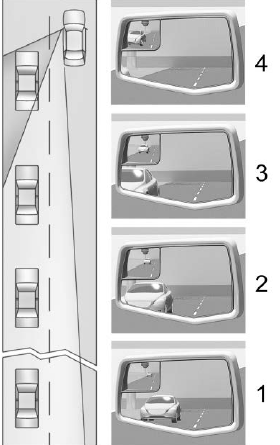
Actual Mirror View
When the approaching vehicle is a long distance away, the image in the main mirror is small and near the inboard edge of the mirror. As the vehicle gets closer, the image in the main mirror gets larger and moves outboard. As the vehicle enters the blind zone, the image transitions from the main mirror to the blind spot mirror. When the vehicle is in the blind zone, the image only appears in the blind spot mirror.