
Chevrolet Silverado: Seats and Restraints / Head Restraints
Warning
With head restraints that are not installed and adjusted properly, there is a greater chance that occupants will suffer a neck/spinal injury in a crash. Do not drive until the head restraints for all occupants are installed and adjusted properly.
Front Seats
The vehicle's front seats have adjustable head restraints in the outboard seating positions.
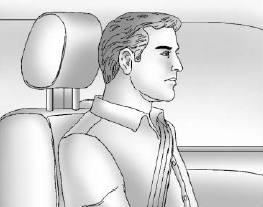
Adjust the head restraint so that the top of the restraint is at the same height as the top of the occupant's head. This position reduces the chance of a neck injury in a crash.
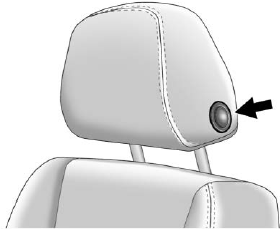
To raise or lower the head restraint press the button on the side of the head restraint and pull up or push the head restraint down and release the button.
Pull and push on the head restraint after the button is released to make sure that it is locked in place.
The front seat outboard head restraints are not removable.

 Rear Head Restraints
The vehicle’s rear seat has head restraints in the outboard seating positions
that cannot be adjusted.
The head restraint can be folded forward to allow for better visibility when
the rear seat is unoccupied...
Other information:
Kia EV2 (QV1, 2026-2026) Owner's Manual: Forward Collision-Avoidance Assist malfunction
Check Driver Assistance system When Forward Collision-Avoidance Assist is not working properly, the Master warning light (), the Forward Safety warning light (), and the Emergency Steering warning light () appear on the instrument cluster, along with a warning message that lasts for several seconds...
Chevrolet Silverado 2019-2026 Owners Manual: Winter Driving
Driving on Snow or Ice Snow or ice between the tires and the road creates less traction or grip, so drive carefully. Wet ice can occur at about 0 °C (32 °F) when freezing rain begins to fall. Avoid driving on wet ice or in freezing rain until roads can be treated...
Categories
- Manuals Home
- 4th Generation Silverado Owners Manual
- 4th Generation Silverado Service Manual
- Heated Steering Wheel
- Steering Column Lock
- Jump Starting
- New on site
- Most important about car
Vehicle Alarm System
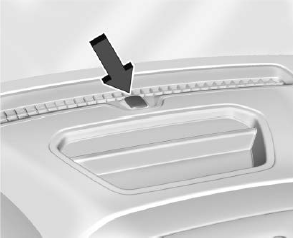
The indicator light, on the instrument panel near the windshield, indicates the status of the system.
