
Kia EV2: Tyres and wheels / Checking tyre inflation pressure
Maintaining proper tyre inflation is vital for the optimal performance, safety, and energy efficiency of your Kia EV2. Make it a habit to check your tyres at least once a month or even more frequently during seasonal temperature shifts.
Always utilize a high-precision digital or analogue pressure gauge to check your tyre inflation levels accurately. You cannot reliably determine if your tyres are properly inflated simply by inspecting them visually, as modern radial tyres can maintain a normal external profile even when they are critically underinflated. To ensure precise readings, always check your tyre inflation pressure when the tyres are completely cold—meaning the vehicle has been stationary for a minimum of three hours or has been driven less than 1.6 km (1 mile) since startup.
Follow these systematic steps to check and adjust your tyre pressure correctly:
- Remove the protective valve cap carefully from the tyre valve stem.
- Press the calibrated tyre gauge firmly straight onto the valve stem to measure the current internal pressure accurately. If the cold tyre inflation pressure matches the exact manufacturer specifications listed on the official tyre and loading information label of your Kia EV2, no further adjustment is required.
- If the recorded pressure is below specification, connect an air compressor hose and add compressed air until you reach the recommended pressure target.
- If you inadvertently overfill the tyre during inflation, release excess air by gently pressing on the internal metal stem located in the centre of the tyre valve using the tip of a pen or gauge key.
- Recheck the adjusted tyre pressure thoroughly with your pressure gauge to confirm it aligns with factory standards.
- Be sure to securely reinstall the protective valve caps back onto every valve stem. These small caps play a critical role in preventing slow air leaks by keeping out damaging moisture, dust, and road grime.
Inspect your tyres frequently for proper inflation status as well as any signs of abnormal tread wear or structural damage. Always rely on a dedicated tyre pressure gauge rather than guesswork.
Operating tyres with incorrect air pressure—whether too high or too low—causes uneven tread wear, compromises vehicle stability, diminishes driving range, and increases the risk of sudden tyre failure. Such failures can lead to hazardous loss of vehicle control, unexpected accidents, severe injuries, or worse. The official recommended cold tyre pressure parameters for your Kia EV2 are clearly detailed in this manual and on the compliance label permanently affixed to the vehicle's side centre pillar.
 Tyre sidewall labeling
This comprehensive technical section identifies and describes the fundamental structural characteristics of the pneumatic tyre while providing the essential Tyre Identification Number (TIN) required for official safety standard certification and regulatory compliance on your Kia EV2...
 Tyre maintenance
In addition to maintaining correct daily inflation pressures, ensuring proper wheel geometry and alignment is essential to prevent premature or uneven tread wear on your Kia EV2...
Other information:
Kia EV2 (QV1, 2026-2026) Owner's Manual: Wheel and tyre installation
When removing and installing wheels and wheel covers on your Kia EV2, always use the specialized cover removal tool stored neatly inside your emergency tool case. The designated insertion slot or notch for the removal tool is conveniently located along the outer edge or perimeter of the wheel cover...
Chevrolet Silverado 2019-2026 Owners Manual: Filling a Portable Fuel Container
Warning Never fill a portable fuel container while it is in the vehicle. Static electricity discharge from the container can ignite the fuel vapor. You or others could be badly burned and the vehicle could be damaged. To help avoid injury to you and others: Dispense fuel only into approved containers...
Categories
- Manuals Home
- 4th Generation Silverado Owners Manual
- 4th Generation Silverado Service Manual
- Driver Information Center (DIC) (Midlevel and Uplevel)
- E85 or FlexFuel
- Folding Mirrors
- New on site
- Most important about car
Power Door Locks
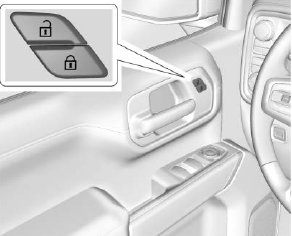
If equipped with power door locks.
 : Press to lock the doors.
